Material Requirement Management (MRM) is a crucial component in the supply chain and manufacturing process. It ensures that materials are available for production, manages inventory, and helps prevent delays. In this article, we will explore three primary benefits of implementing effective Material Requirement Management in any organization.
1. How Does Material Requirement Management Improve Inventory Management?
Effective Material Requirement Management is key to maintaining optimal inventory levels. By forecasting demand and scheduling production, organizations can avoid overstocking or understocking materials, which directly impacts cost efficiency and operational productivity.
Inventory mismanagement can lead to increased holding costs and lost sales opportunities, making MRM indispensable.
MRM employs sophisticated algorithms and data analysis techniques to forecast demand more accurately. This advanced level of forecasting eliminates the guesswork involved in inventory management and enhances the precision with which companies can plan their material needs. Consequently, businesses can significantly reduce the risk of stockouts and surplus inventory.
Optimal inventory management leads to a more streamlined supply chain. With MRM, organizations can synchronize their inventory levels with actual market demand, resulting in lower inventory carrying costs and improved service levels. As a result, companies that implement MRM effectively can focus better resources towards growth-oriented activities.
1.1 Inventory Optimization Through Accurate Forecasting
MRM uses data analytics and forecasting techniques to ensure that the inventory is aligned with demand. This subsection explains the importance of accurate demand forecasting and its role in inventory optimization.
Accurate forecasting in MRM helps companies predict trends and prepare for fluctuations in demand. Through precise demand estimation, organizations can optimize their production schedules and maintain an effective balance between supply and demand. Such balance mitigates waste, reduces costs, and provides a cushion during periods of unexpected demand spikes.
By relying on precise data analytics, MRM not only improves inventory forecasting but also enhances decision-making capabilities. Future-oriented insights allow companies to implement proactive strategies, ensuring that they remain agile and responsive in a continuously evolving business landscape.
2. What Role Does Material Requirement Management Play in Reducing Production Costs?
Material Requirement Management plays a pivotal role in minimizing production costs by streamlining processes and reducing waste. By accurately determining the necessary materials and minimizing excess, MRM contributes to significant cost savings. In industry scenarios where profit margins are tight, efficient resource utilization becomes a powerful differentiator.
Furthermore, MRM optimizes equipment usage by ensuring that required materials are always available, thus preventing unnecessary downtime. The synchronization of production schedules with material availability supports continuous workflow and maximizes output without incurring extra costs. As a result, businesses enjoy enhanced profitability alongside improved operational throughput.
2.1 Minimizing Waste and Streamlining Production Processes
Effective Material Requirement Management helps minimize waste through meticulous planning and accurate material tracking. By implementing just-in-time approaches, businesses can significantly decrease surplus inventory and reduce storage costs. Efficient use of materials contributes directly to cost-effective production environments.
Regular evaluation and refinement of MRM systems can lead to continuous improvements in operational efficiencies. By focusing on waste elimination and process enhancement, companies can foster a culture of continual improvement. This proactive approach leads to sustainable cost management and long-term operational success.
3. How Can Material Requirement Management Enhance Supplier Relationships?
Maintaining strong supplier relationships is a crucial aspect of effective Material Requirement Management. By ensuring timely orders and clear communication, businesses can foster stronger partnerships and improve supply chain reliability. Collaboratively working with suppliers ensures that both parties benefit from increased efficiency and reduced risk.
Establishing efficient communication pipelines with suppliers enables businesses to proactively address any potential issues or delays. Open lines of communication allow for swift resolution of potential disruptions, ensuring supply chain continuity and operational resilience. Consequently, businesses that prioritize supplier relationships enjoy better service levels and improved supply chain metrics.
3.1 Strengthening Communication with Suppliers for Timely Deliveries
Regular updates and shared forecasts between businesses and suppliers help align expectations and coordinate schedules more accurately. This level of coordination reduces uncertainties and promotes consistency in the supply of materials. Proactive communication fosters a mutual understanding of objectives, resulting in enhanced partnership outcomes.
Strong supplier relationships, fostered through effective MRM practices, contribute to the operational agility of organizations. Suppliers who are informed and involved can provide strategic input and support that aligns with the business goals. Through trust and cooperation, companies can drive innovation and gain competitive advantages in their supply chains.
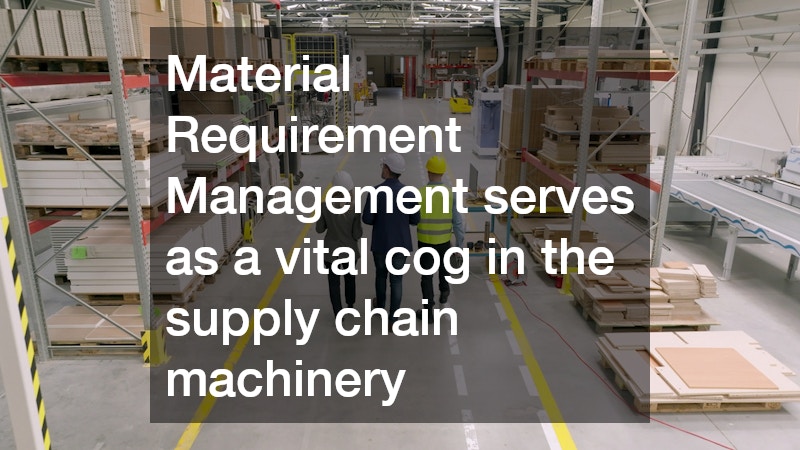
Material Requirement Management serves as a vital cog in the supply chain machinery. By improving inventory management, reducing production costs, and enhancing supplier relationships, MRM ensures smoother, cost-effective, and more reliable operations. Adopting robust MRM practices is undoubtedly a strategic move for any organization aiming for operational excellence.